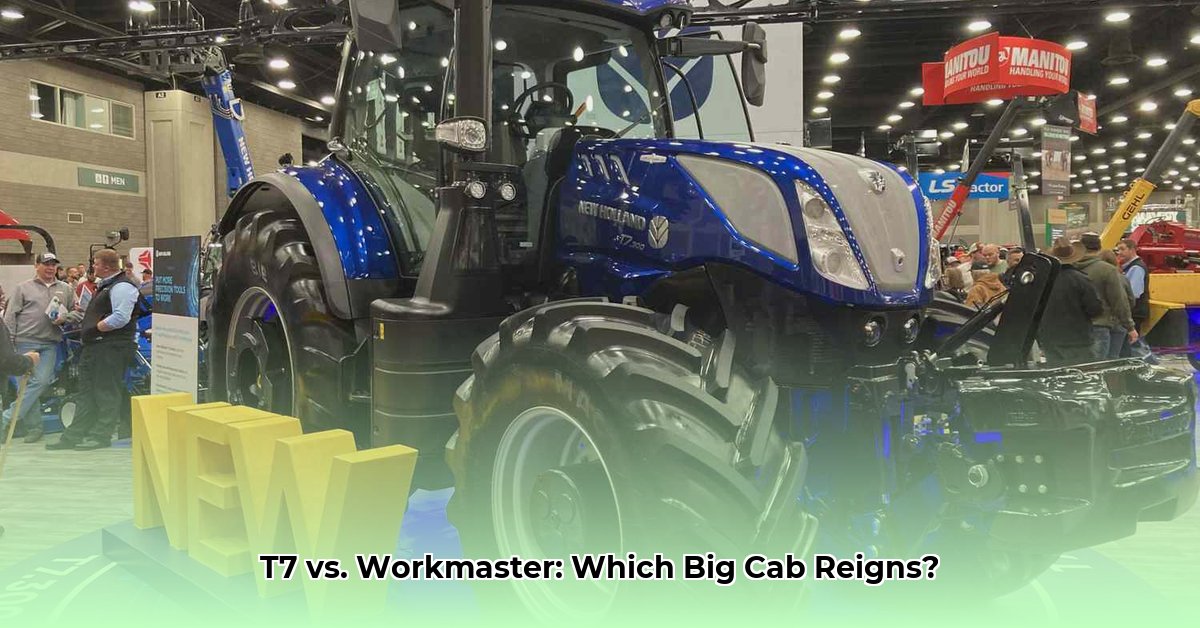
Choosing the right tractor is a significant investment for any farmer, especially those prioritizing sustainable agricultural practices. This comparative analysis examines New Holland's T7 and Workmaster tractor series, focusing on technical specifications and their relevance to environmentally conscious farming. We'll explore horsepower, technology, cost, and long-term sustainability to help you make an informed decision. For more information on large agricultural equipment, check out this helpful resource.
Cab Comfort and Features: Luxury vs. Functionality
Both tractor lines prioritize driver comfort, but the level of comfort differs significantly. The T7 boasts a premium cab with features like advanced climate control and ergonomic seating, creating a luxurious driving experience. Think of it as the difference between a luxury car and a reliable pickup truck – both serve their purpose, but the experience differs. The Workmaster, while comfortable and functional, offers a more practical workspace.
Technology and Precision Farming: Innovation vs. Simplicity
The T7 distinguishes itself with its integrated PLM Intelligence™ system, a suite of precision farming technologies designed to enhance efficiency and resource management. Features like auto-guidance optimize fuel use, minimize overlaps, and maximize yields, resulting in a more sustainable approach. The Workmaster, on the other hand, employs a simpler, more traditional control system, ideal for farmers who prefer a hands-on approach and value straightforward operation. Which approach aligns better with your farming style and technological comfort level?
Power and Performance: Horsepower and Workload
A substantial difference exists in horsepower capabilities. The T7 offers significantly higher horsepower options (ranging from 150 to over 340 hp), making it suitable for large-scale operations and demanding tasks. The Workmaster series provides moderate power (typically ranging from 95 to 120 hp), perfectly adequate for smaller farms or operations with less intense workloads. Do your current farming operations routinely demand high horsepower, or would a machine with moderate power suffice?
Cost Analysis: Initial Investment and Lifecycle Costs
The T7 commands a higher initial purchase price due to its advanced technology. However, the long-term cost of ownership must be carefully considered, taking into account factors such as fuel consumption, maintenance costs, and potential efficiency gains from precision technology. While the higher initial investment of the T7 may result in long-term savings due to increased efficiency, a thorough lifecycle cost analysis is crucial before making a final decision. "The T7's advanced features can lead to significant long-term savings through reduced fuel consumption and increased efficiency," explains Dr. Emily Carter, Agricultural Engineering Professor at Cornell University. "However, the initial investment requires careful financial planning."
Sustainability: Minimizing Environmental Impact
Both tractor lines support sustainable farming practices, but through different approaches. The T7's advanced technology directly minimizes resource waste and maximizes efficiency, leading to a reduced environmental footprint. The Workmaster's lower cost makes efficient farming more accessible to smaller farms with tighter budgets. Both contribute to sustainable agriculture, although through varied strategies.
Comparative Specifications: A Side-by-Side Look
| Feature | New Holland T7 Series | New Holland Workmaster Series |
|---|---|---|
| Horsepower | High (150-340+ hp) | Moderate (95-120 hp) |
| Technology | Advanced PLM Intelligence™, Autoguidance | Basic Controls |
| Cab Comfort | Premium, Luxurious | Comfortable, Functional |
| Initial Cost | High | Low |
| Maintenance | Potentially more complex | Generally simpler |
| Ideal Farm Size | Larger farms, demanding tasks | Smaller farms, less demanding tasks |
| Fuel Efficiency | Potentially higher, dependent on workload | Generally lower |
| Resale Value | Typically higher | Typically lower |
Lifecycle Cost Analysis: A Step-by-Step Guide
Choosing between the T7 and Workmaster necessitates a thorough lifecycle cost analysis. This involves comparing all aspects of cost over the machines' lifespan. A detailed comparison will inform you whether the higher initial cost of technology-rich tractors like the T7 pays off in the long run or if the Workmaster's lower upfront price and maintenance are more economically viable.
Gather Specifications: Obtain detailed specifications for your chosen models, including horsepower, fuel consumption rates, recommended service intervals, and projected repair costs.
Calculate Fuel Costs: Estimate your annual operating hours and use fuel consumption data to project yearly fuel expenses for each tractor.
Estimate Maintenance Costs: Use the manufacturer's maintenance schedules and factor in potential repairs based on historical data from dealerships to project annual maintenance expenses.
Project Resale Value: Research resale values of similar used tractors to estimate the resale value of each model after a defined timeframe.
Calculate Total Cost of Ownership (TCO): Sum the initial purchase price, fuel costs, maintenance costs, and subtract the projected resale value to determine the TCO for each tractor over its lifespan.
Analyze Results: Compare TCO for both tractors. Does the T7's enhanced efficiency compensate for its higher initial investment and potential maintenance needs? This will help you choose the model that best aligns with your budget and sustainability goals. Remember that factors such as fluctuating fuel prices can significantly influence the final analysis.
Key Considerations:
- A comprehensive lifecycle cost analysis is essential for making an informed decision.
- The T7's higher initial cost might be offset by increased efficiency and potentially higher resale value.
- The Workmaster offers a more affordable initial investment and simpler maintenance, but sacrifices some efficiency benefits.
- Consider your farm size, workload, budget, and long-term agricultural goals when evaluating each tractor's suitability.